Pangram Labs published a study on July 9, 2026, analyzing 1,002,627 posts across LinkedIn, Medium, Substack, X, and Reddit. The result: LinkedIn leads every platform in AI-generated content. Pangram found that 41% of long-form posts on LinkedIn are fully machine-written. For shorter posts between 50 and 250 words, the Pangram data shows 30%.
LinkedIn made up about a third of all posts in the Pangram dataset. It produced 62% of all AI-generated posts detected across every platform combined.
The engagement number is what matters most for paid media: Pangram found that AI-generated posts earn 45% less engagement than human-authored posts on the same platform.
Why Thought Leader Ads are directly exposed
LinkedIn Thought Leader Ads work because they borrow credibility. The format takes a post from an individual's profile — a senior executive, a known voice in the industry — and puts paid budget behind it. It lands in the feed looking like content someone chose to write. The format outperforms standard company page sponsorships by wide margins because professional audiences respond differently to individual voices than to brand logos.
That advantage is entirely dependent on the content being genuine. A CFO sharing a real perspective on a market shift carries different signal value than a post that reads like a LinkedIn ghost-written by a language model. The format's CPM premium assumes the authenticity is there.
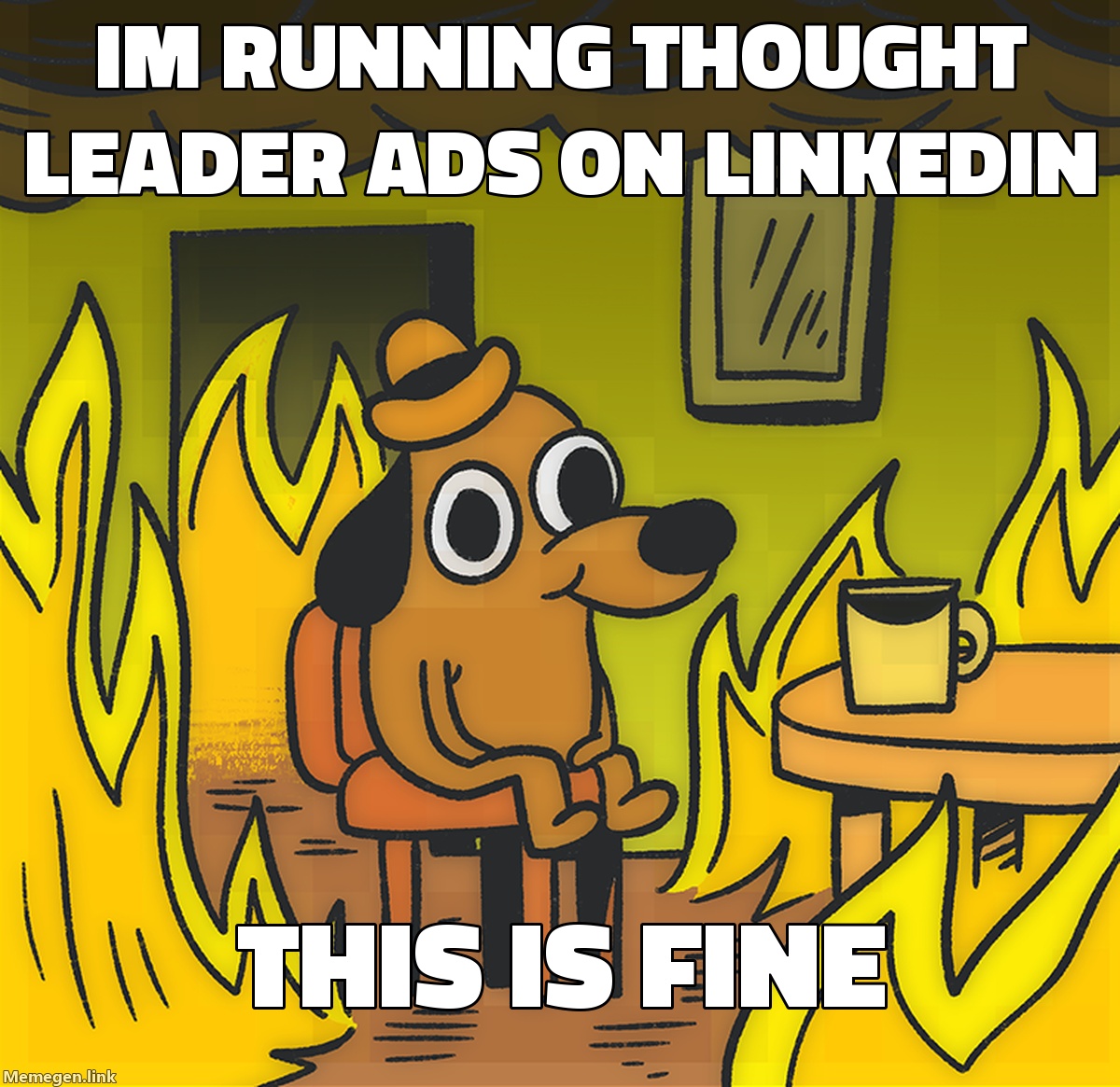
If the post being amplified was AI-generated, that assumption is wrong. According to the Pangram data, platform audiences already engage less with AI-written content — 45% less, even without a label telling them what they're reading. You're putting budget behind the lower-performing category of post on the platform whose entire ad format is premised on authentic human voice.
The problem doesn't show up in reporting
LinkedIn doesn't flag AI-generated posts in Campaign Manager. There's no column in your Thought Leader Ad reporting that tells you whether the underlying post was written by the person whose name is on it. You're selecting posts to promote, not running any authenticity check as part of that workflow.
For brands running systematic TLA programs — multiple executives, posting regularly, with content teams managing drafts — the AI generation rate is probably higher than most account managers would guess. Content teams working at volume reach for AI tools. Some executives publish AI output with minimal editing. There is no mechanism inside LinkedIn's platform that creates accountability for this, and there's nothing coming that will.
The result: you can spend significant paid budget amplifying AI-generated content through the one LinkedIn format that only works when the content is real. Campaign performance data won't tell you this is happening. The only way to catch it is to ask.
What the engagement gap costs in practice
Pangram data shows a 45% organic engagement gap, but that doesn't translate directly to 45% worse ad performance. Thought Leader Ads reach audiences through paid targeting, not through the organic distribution of the post itself. The impression happens regardless of how the post would have performed without budget.
But there are two real costs. The first is algorithmic. LinkedIn's ad system uses engagement signals as part of how it assesses ad quality. Posts with meaningful organic engagement before promotion — saves, comments, reshares from people who chose to engage — start with a stronger signal. A post with near-zero organic engagement before you put budget behind it carries a quality deficit that shows up in delivery efficiency over time.
The second cost is audience signal. A share of your target audience — often the most attentive, most senior people your TLA campaigns are trying to reach — can identify AI-generated writing without a detection tool. They don't need a label. They notice the sentence rhythms, the structure, the absence of anything specific. These are the readers your Thought Leader Ads are built to reach. Amplified AI content reads as amplified AI content to them.
What to do about it
The fix is straightforward but requires asking a question most TLA programs skip. Before attaching budget to a post, verify how it was written. Ask the executive or their team directly. For future content, set the expectation upfront: AI assistance for structure or editing is different from generating a first draft and publishing it unchanged. The Pangram study's detection threshold is "fully AI-generated" — posts where the author's voice and judgment are genuinely present are a different category.
If you manage Thought Leader Ads across multiple executives, add two questions to your content approval workflow before any post gets budget: who wrote the first draft, and was it edited substantially before publishing. It takes under two minutes per post and closes the gap that your reporting doesn't show.
LinkedIn thought leadership works when it's actually thought leadership. Running the format on AI output is paying for the name on the post without buying what the format sells.
The free account audit at gromerce.com/audit shows where your LinkedIn paid structure is working and where it isn't earning the CPM you're paying.
Sources: Pangram Labs, Fast Company, Tech Times, AI Weekly, July 2026