What actually changed
Google updated its Google Ads Terms of Service this week, the first revision in 8 years. The changes go live July 1.
The core shift is in how automation is framed. The previous version described automated features as things you could choose to use. That language is gone. The updated terms authorize Google to "format, select, or generate targets, ads, and destinations on an advertiser's behalf" — not as a choice you make, but as a description of how the platform already works.
The update also covers what happens to your inputs. Information entered into conversational experiences inside Google Ads (the Gemini campaign builder, AI Brief) may be used by Google's systems. URLs and accounts you've authorized Google to crawl for automated campaign setup are now explicitly included in the terms.
What the AI is already generating in your account
This isn't a hypothetical. Performance Max generates headlines, descriptions, and image combinations it tests without asking you first. AI Max for Search pulls copy from your landing pages and constructs ad headlines dynamically. Conversational Discovery Ads (now in US testing) have Gemini writing the ad for each individual query based on your product data.
If you haven't looked at your Assets report recently, there are assets running in your account that you didn't write and probably haven't read.
The liability shift
The ToS update removes one specific ambiguity: who is responsible when an automated asset causes a problem.
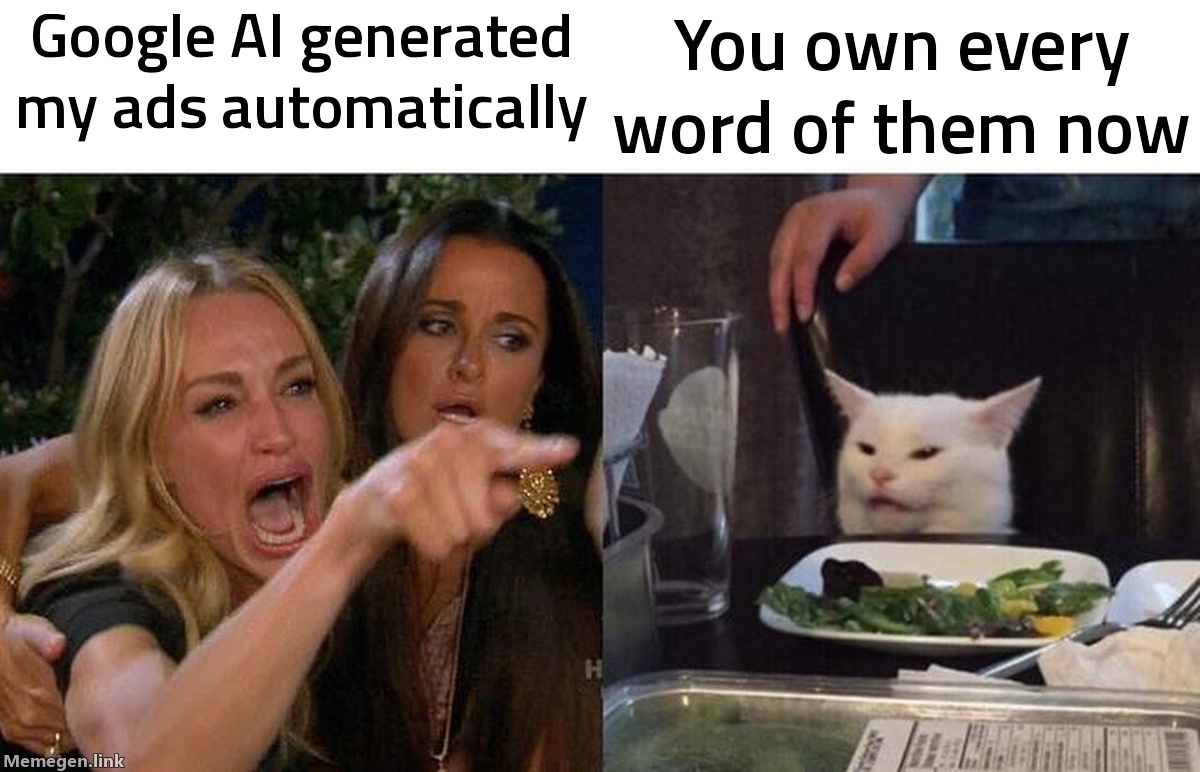
The old "optional" framing gave advertisers soft cover. If something went wrong with an AI-generated ad, you could argue the automated feature wasn't something you explicitly chose. The new language takes that off the table. You are responsible for:
- Reviewing and approving all automatically generated ad assets
- Ensuring you hold the rights to any inputs you provide to Google's systems
- Removing AI-generated campaigns or assets that don't meet your standards
The exposure isn't new. What's new is that the ToS now puts it explicitly in your name.
What to do before July 1
Three weeks is enough time to do this right.
Run an Assets report audit. In Google Ads, go to Assets > Asset Details. Filter by performance rating. "Learning" and "Low" rated assets are the ones the system is actively generating and testing without your explicit approval — verify each one against your brand guidelines and disapprove anything that wouldn't pass a manual review.
Check your automated asset settings. Under Campaign Settings, look for "Automatically created assets." For campaigns where brand voice or legal compliance matters, consider turning this off or setting it to review mode only.
Review which URLs you've authorized Google to crawl. The new ToS specifically covers URLs and accounts given access for automated campaign setup. If your site has archived product pages, outdated pricing, or copy you wouldn't want in an ad, block those sections in robots.txt or exclude them from campaign URL targeting.
Build in a recurring weekly check. Google doesn't alert you when a new automated asset starts running. A calendar reminder to review your Assets report weekly is low-effort and covers most of the ongoing exposure.
The accounts most at risk are those that launched PMax campaigns once, never returned to the Assets tab, and assumed Google handled brand safety automatically. It doesn't.
The bigger point
This isn't Google grabbing new power. They've been generating ads autonomously in accounts for years. Performance Max wrote headlines before most people noticed. AI Max pulls copy from your landing pages whether you're watching or not. The difference is that the legal documentation now reflects how the platform actually works.
Every headline in your account is yours. The ones a human wrote and the ones an algorithm generated at 3am last Tuesday. The July 1 terms don't create that responsibility — they just say it plainly for the first time.
If you want to see which campaigns in your account are running the highest share of AI-generated assets, the free Gromerce audit pulls that signal in minutes.
The AI is writing your ads. July 1 is when the paperwork caught up.
Related articles: google-ads-ai-mode-placement-2026 · google-dsa-ai-max-migration-2026 · google-conversational-discovery-ads-ai-mode-2026
Sources: Search Engine Land, ZATO PPC Marketing, Webtopia, Google Ads Help Center, June 2026