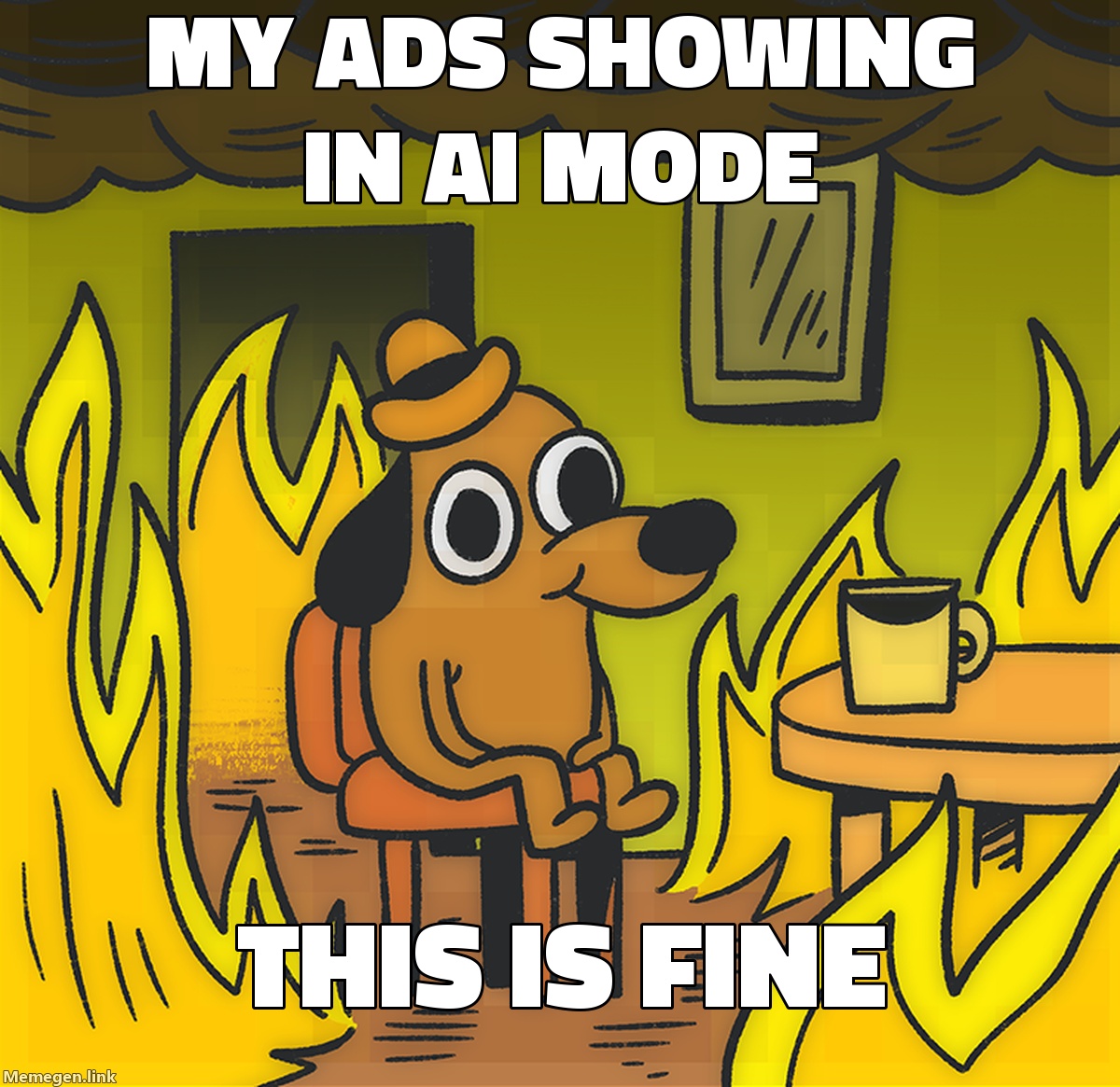
What's actually live in AI Mode
Google's AI Mode — the full-screen, conversational search interface that synthesizes answers from multiple sources — now includes paid ads in roughly a quarter of responses. That share is rising.
There was no press release. The expansion has been rolling out in the US since early 2026, and most advertisers haven't noticed because there's no AI Mode-specific report in your account. Third-party measurement tools are the ones confirming it. Google's VP of Retail Ads acknowledged in April that performance from early AI Mode ad tests looks strong, which is as close to an official confirmation as we've gotten.
Two placements are now documented. "AI Mode Bottom Ads" sit below the AI-generated answer block, functioning like a secondary search results page. "Direct Offers" is a different animal — personalized promotional deals that appear inside the conversational response itself when Google's AI detects high purchase intent from the full session context.
You're probably already there
If you run Performance Max or AI Max for Search campaigns, you're eligible for AI Mode placements. Google estimates all four million PMax advertisers are in scope. There's no separate line item, no opt-in, no specific bidding control for this surface.
Your budget is already being allocated to AI Mode. The question is whether your account is set up to take advantage of it.
For brands with strong product feeds and compelling offers, this is potentially free additional reach before competition heats up. For brands with weak Merchant Center data, outdated assets, or generic copy — Google's AI is making relevance decisions you can't see, and you're losing placements regardless of how much you spend.
How Direct Offers actually works
Direct Offers is the part that matters most for e-commerce brands. A user is mid-session in a conversation about, say, running shoes. Google detects high purchase intent from the full query context — not a single keyword match. It then surfaces an exclusive deal from a brand's Merchant Center promotions feed directly inside the AI response.
There's no keyword trigger. The placement isn't won through a higher bid. Google decides what shows based on intent signals the advertiser has no visibility into. Your promotions feed is the creative.
If your promotions are stale, missing, or vaguely written, you won't appear. If your product titles are thin and your attributes are incomplete, Google has nothing to pull from. The same feed quality problems that hurt your Shopping campaigns are now also costing you placements in AI Mode.
This is the continuation of a trend Google has been pushing for years: less advertiser control over targeting, more platform control over relevance. AI Mode accelerates it faster than most accounts are prepared for.
What's coming on May 20
Google Marketing Live 2026 is confirmed for May 20. Expect formal announcements about AI Mode ad formats, eligibility rules, and whatever new controls Google is willing to hand advertisers. Based on the current testing patterns, announcements will likely include expanded Direct Offers availability and updated guidance on how PMax and AI Max feed into AI Mode placements.
What gets announced on May 20 will move into general availability quickly. Accounts that are in good shape when that happens will see results. Accounts that aren't will spend money figuring it out after the fact.
Four things worth doing before May 20
-
Pull your Merchant Center product feed and look at it honestly. Missing GTINs, duplicate titles, no promotional content, images that barely meet spec — these aren't cosmetic problems anymore. They directly affect whether your products appear in Direct Offers.
-
Audit your PMax asset groups. Whatever creative lives in those groups is what Google pulls from for AI Mode placements. If you have one generic headline set and stock photography from two years ago, that's what's representing your brand in conversational search.
-
Check your placement exclusions inside PMax. You have limited controls, but use them intentionally. Most accounts still have defaults that were never touched.
-
Record your current impression share and cost metrics by campaign before May 20. You'll need a clean baseline to evaluate whether AI Mode is delivering incremental reach or just inflating impression counts.
This is not a situation where waiting makes sense. The placement is live. If you want to know where your account stands before Google officially opens this up, Gromerce's free audit surfaces Merchant Center gaps, asset quality issues, and PMax structure problems in about three minutes.
Your keywords aren't going away, but the surface where they now compete has quietly expanded into territory your account wasn't built for.
Related articles: google-ads-ctr-rising-conversions-flat · google-ads-data-retention-cut-june-2026 · google-dsa-ai-max-migration-2026
Sources: Search Engine Land, Accelerated Digital Media, Next Millennium Media, NWS Digital, May 2026