What changed August 31
TikTok's Branded Content Policy has existed since 2021. What changed August 31, 2026 is enforcement. TikTok's automated detection system now scans new posts for commercial signals — product placements, brand mentions, direct response language — and flags content that looks promotional within 2–3 hours of going live.
If the creator doesn't have the commercial content disclosure toggle enabled, TikTok sends an in-app notification. The creator has 24 hours to add the disclosure label or appeal. Miss that window, and the content becomes For You Page-ineligible, limited to followers only.
Per TikTok's updated Branded Content Policy, any content that promotes a brand, product, or service for any incentive — including gifted product, affiliate commission, or referral bonuses — requires disclosure. The threshold isn't whether money changed hands. It's whether any commercial relationship exists at all.
The policy has been live for years, but the detection was manual and slow. Starting this week, it's not.
The Spark Ads blindspot you haven't fixed yet
Here's where DTC brands are exposed in a way most campaign managers haven't thought through.
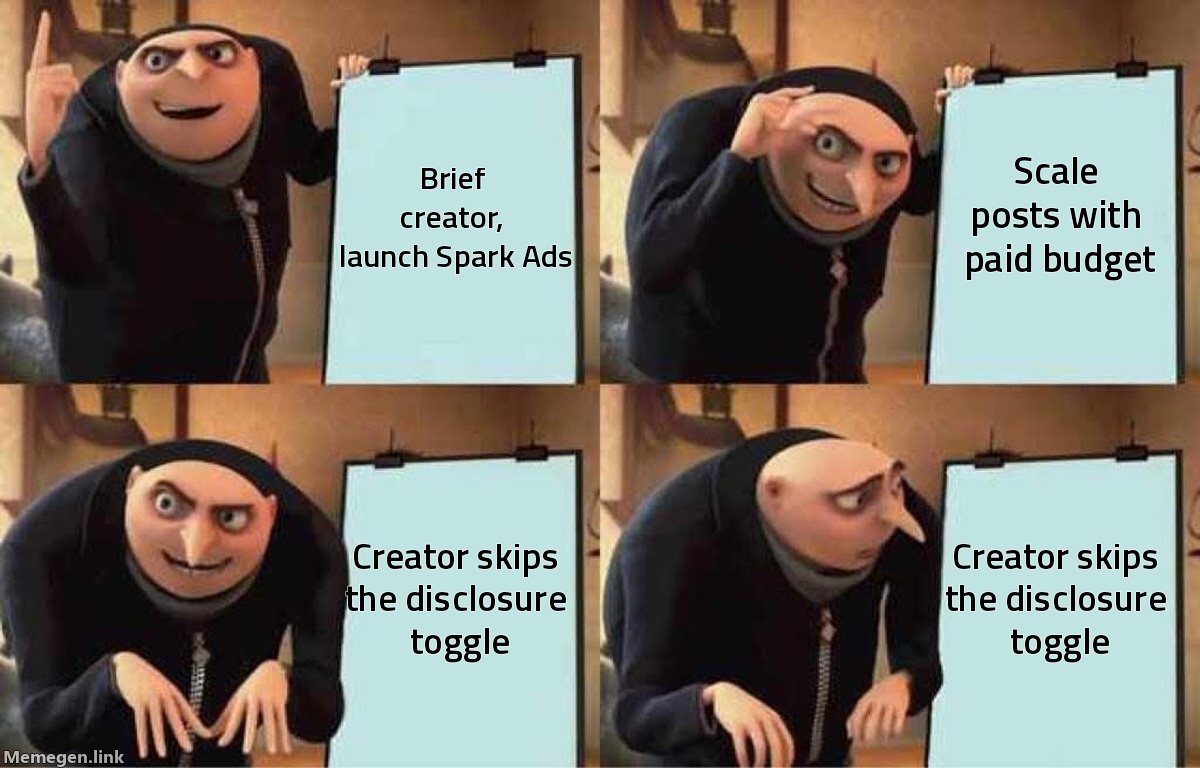
When you run Spark Ads, you're boosting an organic creator post. You don't own the post. You can't edit it. TikTok's enforcement hits the post — and if TikTok suppresses it for non-disclosure, your Spark Ad loses its source creative. The campaign doesn't fail with an error message. It just stops delivering.
The brands most exposed are those running Spark Ads against older creator content — posts from the past few months that predate the current enforcement window and were never tagged for commercial disclosure. TikTok's detection can flag them regardless of when they were published.
This is a structural risk that wasn't real six months ago. Spark Ads were a reliable amplification layer because TikTok's enforcement was loose. That's changed.
Before pulling Spark Ad performance data this week, check whether any of your source posts lost organic distribution in the past 48 hours. If a post suddenly looks like it's serving only to followers, the Spark Ad running on it may already be compromised.
The dropshipping enforcement track
Alongside the branded content disclosure rules, TikTok has tightened enforcement on a second front that hits a different segment of DTC brands.
Before/after transformation imagery is now banned in ads. Any ad for a product shipping from outside the buyer's country must include the ship-from country and a realistic delivery estimate. Per TikTok's updated ad policies, language like "fast shipping" or "ships soon" doesn't meet the standard. Ads making unrealistic delivery claims face penalties on a three-strike system — and the third violation triggers a permanent advertiser ban with no appeal process.
For DTC brands using supplier-based fulfillment — manufacturing or shipping from China or Southeast Asia — every ad creative mentioning delivery speed needs to be reviewed. The enforcement applies at the ad level. One compliant creative in your account doesn't protect the others.
If you have active ad sets with before/after imagery, pause them now and swap the creative before they trigger a warning.
What to fix in your creator contracts
Most creator agreements in use today were written before TikTok disclosure compliance carried real enforcement risk. They specify messaging, hashtags, links, and posting windows — but the branded content toggle is treated as a best practice, not a deliverable.
That gap needs to close. Before the next creator brief goes out, add a clause making the TikTok commercial disclosure toggle a hard requirement tied to the posting deadline. Make the creator send a screenshot of the enabled toggle as part of handoff. Some brands are already conditioning invoice payment on disclosure confirmation — proof of the label before the invoice gets approved.
For existing Spark Ad campaigns: pull the list of post IDs you're running against, check each one for the "Paid partnership" label visible on the post, and flag any missing it. A creator who didn't disclose in June needs to update their post now before your active ad gets caught in this week's enforcement sweep.
The creator agreement is your only lever here. TikTok's enforcement hits the post, and the creator controls the post.
The direction TikTok is heading
This isn't an isolated enforcement event. TikTok has tightened creator compliance standards each quarter in 2026: the AI voice ban for promotional livestreams in May, the dropshipping disclosure requirements in Q1, and commercial content labeling now enforced at scale.
The platform is building a more regulated creator economy. That's good for long-term brand safety and bad for brands still treating TikTok like the Wild West of paid social.
Organic presence and paid Spark Ads are now structurally linked to creator compliance behavior. That's a new operational dependency worth building into your Q4 workflow, when campaign volume and creator partner count both increase.
If you want to see how your current cross-channel signal setup holds up, Gromerce's free audit tool can surface the gaps in a few minutes.
Creator compliance is now a paid media problem. Treat it like one.
Sources: TikTok Branded Content Policy (tiktok.com/legal), TikTok for Business, Search Engine Land, Social Media Today, September 2026