What Amazon just got sued for
On August 31, 2026, the Federal Trade Commission filed suit against Amazon in federal court, joined by the attorneys general of 22 states. The allegation: Amazon secretly inflated auction prices across Sponsored Products, Sponsored Brands, and Sponsored Display from 2019 onward, collecting more than $20 billion in undisclosed surcharges from 1.2 million advertisers — including more than 500,000 small and mid-size businesses.
If you've spent years wondering why Sponsored Products CPCs trended up faster than your bid adjustments could explain, the FTC now has a public filing that addresses it.
How the surcharges allegedly worked
Amazon runs what it calls a second-price auction: you bid, you win the impression, you pay just above what the next-highest bidder offered. That's the auction model every advertiser on the platform has been optimizing around. Your bid strategy, your placement adjustments, your dayparting — all calibrated to how you think that auction works.
Per the FTC complaint, Amazon was secretly adding a surcharge on top of the clearing price, pocketing more than the second-price mechanism would generate. The FTC filing states that these surcharges applied to between 70% and 80% of Amazon's auctions. Internal Amazon documents cited in the FTC complaint show employees discussing price increases while "hoping that advertisers don't notice and decrease bids or ad spend."
That's not a system quirk. That's a documented decision to conceal the mechanism from the people paying for it.
Amazon's rebuttal
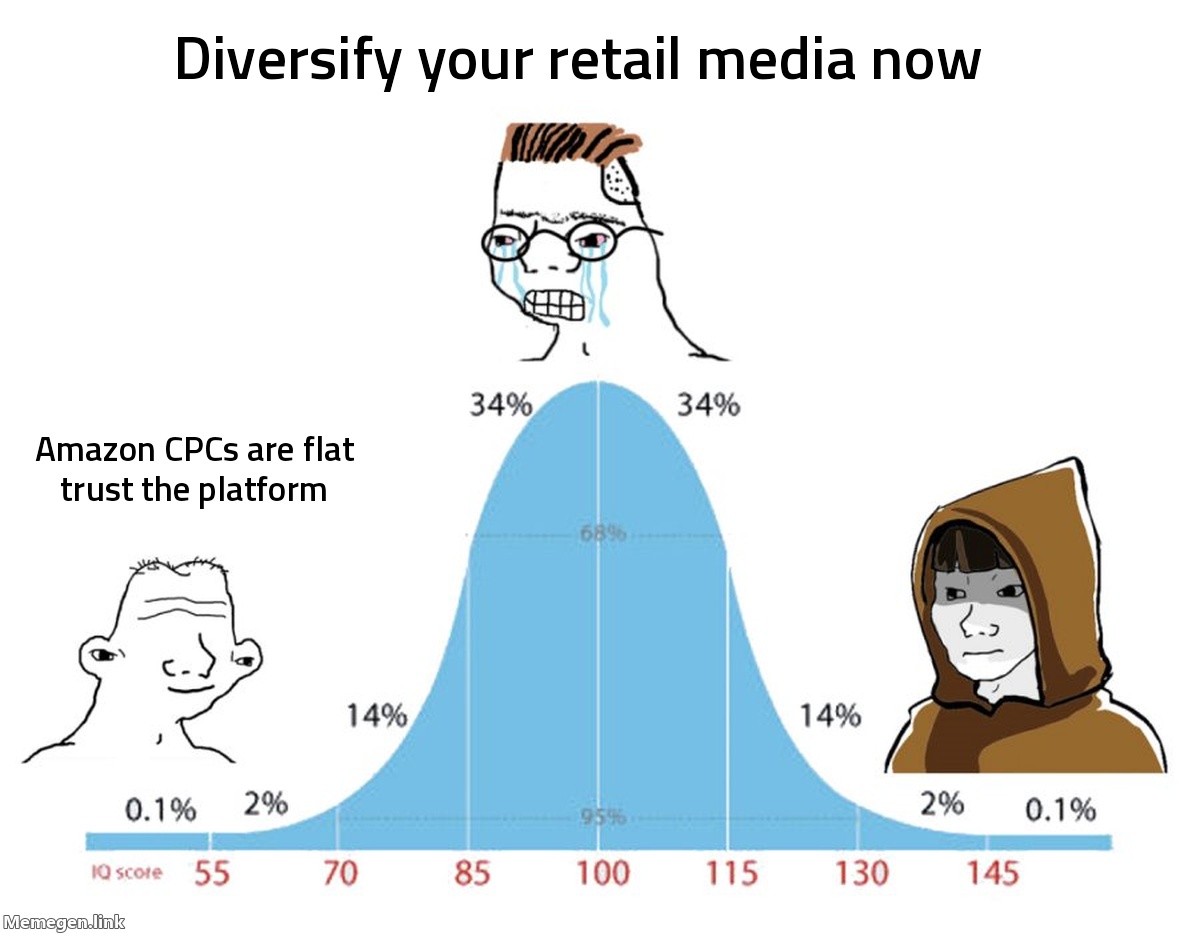
Amazon called the lawsuit "misguided" and said it "fundamentally misunderstands how advertisers operate." The company argues, per Adweek, that average Sponsored Products CPCs remained flat from 2019 to 2024 adjusted for inflation, while conversion rates grew 24% over that period — meaning advertisers "paid the same and got more." Amazon also says its auction systems delivered $8 billion in savings to advertisers between 2021 and 2025, per Marketing Dive.
These figures aren't invented. But they don't address the core allegation. Even if average CPCs landed flat at the portfolio level, a secret price floor at the auction level still means advertisers couldn't accurately model their own bid floors, opportunity costs, or the marginal return on incremental spend. The information asymmetry is the problem, not just the price outcome.
What doesn't change today
Nothing changes in your Amazon Ads account this week. Ad-tech antitrust cases take years. The Google ad-tech case ran from investigation through liability ruling and into remedies over multiple years. Amazon's case is at the complaint stage — which means any FTC-mandated remedy, whether that's refunds, auction transparency requirements, or structural changes, is at minimum 18 to 24 months away if the FTC prevails.
What should change in how you think about your data
Your historical Sponsored Products CPC data has a potential systematic distortion that wasn't caused by competitor bids. If your CPCs climbed steadily from 2019 while bid strategy and conversion rates stayed relatively stable, part of that increase may have reflected undisclosed surcharges rather than market dynamics.
That changes how you should benchmark Amazon spend against Google, Meta, or Walmart Connect. The comparison was never on level ground.
It also gives you the strongest public argument yet for diversifying retail media. Walmart Connect, Instacart, Target's Roundel, and Criteo-powered retailer networks all operate outside Amazon's auction system. Putting a meaningful share of retail media budget into alternatives creates real benchmark pricing — actual price discovery that you can't get from a single platform where the rules may have been stacked against you.
What to do now
Pull your Sponsored Products CPC trend from 2019 to today. Compare it against your own conversion data, not Amazon's aggregated figures. If CPCs climbed while bids and conversion rates held relatively steady, that gap is worth documenting before any potential settlement changes the historical picture.
Don't cut Amazon spend reactively. You'd lose organic rank and competitive positioning without resolving the underlying problem. But if "Amazon first" has been a default assumption rather than a deliberate choice, this complaint is the clearest argument yet for auditing that assumption.
The companies positioned best after any resolution are the ones already running real multi-retailer media strategies — not the ones waiting for a settlement to tell them what Amazon's ad prices should have cost.
If you want to see how your current retail media mix compares against benchmarks, the free account audit at Gromerce can surface the gaps in under three minutes.
The mechanism was hidden. The prices weren't.
Sources: Adweek, Marketing Dive, MediaPost, Search Engine Land, September 2026