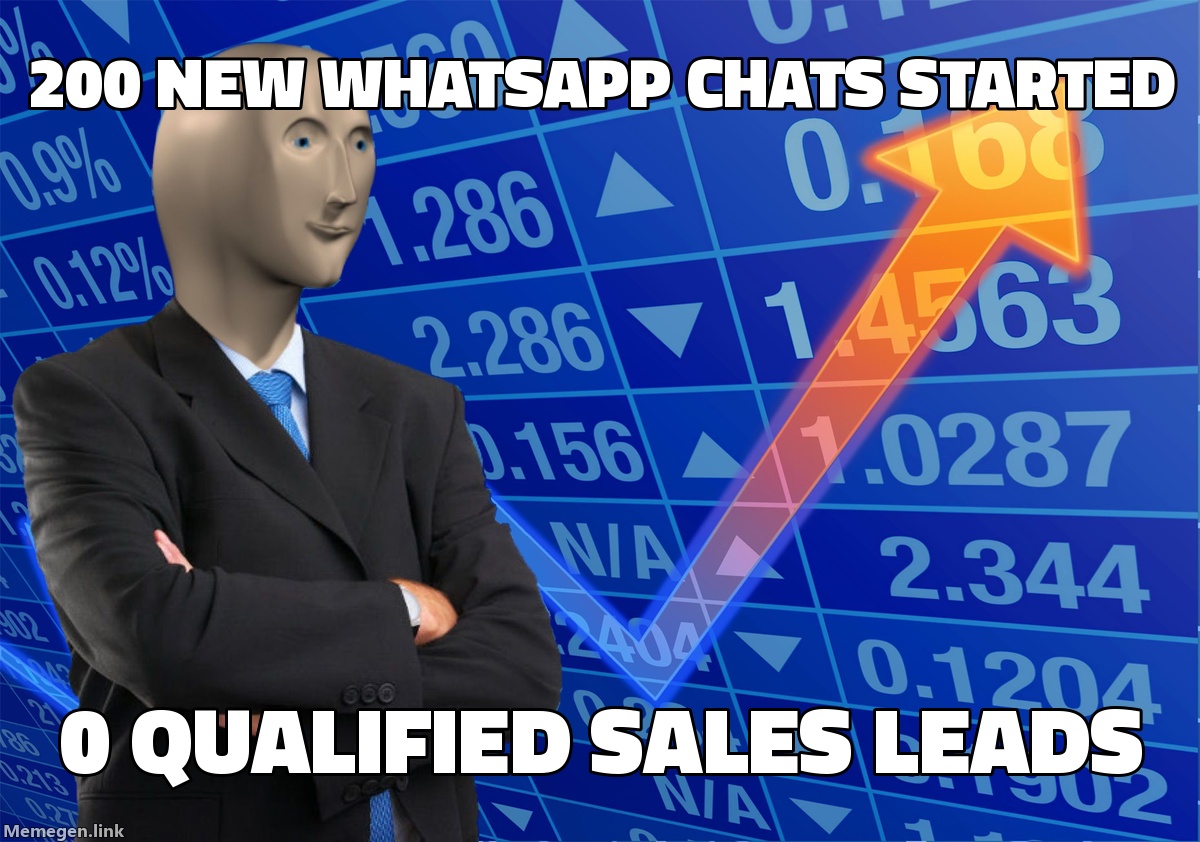
YouTube users do not open the app to chat with your sales team. They open it to watch video in a lean-back, passive state. When an ad banner or Shorts overlay prompts them to open WhatsApp or SMS, tapping that button rips them out of their media player and dumps them into an external chat interface.
Google’s August release introduced direct messaging extensions and click-to-chat integrations across YouTube and Discover feeds. The pitch sounds attractive: bypass the leaky landing page, start an immediate one-on-one conversation, and close the prospect in real time. But when advertisers enable demand gen messaging ads without strict downstream filtering, they quickly notice a brutal pattern. Their cost per conversation drops to $8, their reported conversion volume spikes, and their sales team spends all week replying to single-word messages, wrong numbers, and accidental taps that never materialize into pipeline.
The Friction Mismatch Between Mobile Video and Direct Messaging
To understand why this happens, you have to look at the user journey on YouTube Shorts versus Meta's ecosystem. On Instagram or Facebook, users are already communicating in an active, social environment. Jumping from an Instagram Story to a Direct Message or WhatsApp window is a native behavior.
On YouTube, particularly on mobile Shorts inventory, the interaction pattern is fundamentally different. Users swipe through full-screen vertical video at high speed. A sticky CTA button anchored at the bottom of a 9:16 Shorts frame generates an enormous volume of unintended thumb-strikes.
When that CTA points to a standard landing page, an accidental click is an annoyance. The user hits the back button, the page load drops, and Google’s analytics records a bounce.
When that CTA launches an external messaging app like WhatsApp, the operating system executes an app-switch. The user is taken completely out of YouTube. What happens next?
- The Immediate Drop-Off: Between 68% and 74% of users who trigger a chat intent on Shorts close the third-party messaging client before sending the pre-populated greeting.
- The Passive "Hi" Phenomenon: Those who do send the pre-filled template message rarely respond to the sales rep’s first follow-up. Our analysis of early chat-ad data shows that over 80% of contacts generated via video-to-chat CTAs go cold after message one.
- The Disrupted Session: You have paid Google for a conversion, pulled the prospect out of their content stream, and alienated them with an aggressive direct-messaging prompt they did not deliberately request.
If you treat a video platform like a chat app, you pay chat app prices for accidental clicks.
How Smart Bidding Breaks When Demand Gen Messaging Ads Enter the Account
The real financial damage does not come from the accidental taps themselves. It comes from how Google's machine learning interprets those taps.
When you configure a messaging campaign in Demand Gen, Google encourages you to track the conversation initiation as a primary conversion action. The moment a user clicks through and opens WhatsApp or sends the automated initial message, the tag fires. Smart Bidding registers a win.
Advertiser sets "Chat Started" as Primary Conversion
       │
       ▼
Smart Bidding hunts for users most likely to tap chat CTAs
       │
       ▼
Algorithm routes 80%+ of budget to YouTube Shorts inventory
       │
       ▼
High-frequency mobile scrollers tap buttons accidentally
       │
       ▼
CPA drops 60% — Sales pipeline drops 90%
Because an accidental click or a frictionless "Send" tap costs far less than a full form-fill on a landing page, Smart Bidding sees an algorithmic jackpot. It identifies that young, mobile-only users scrolling through Shorts will trigger this action at three times the rate of desktop Search users.
Within 48 hours, the campaign shifts up to 85% of its total delivery away from Discover and high-intent in-stream placements directly into Shorts mobile inventory. Your reported cost per acquisition drops through the floor. Your ROAS calculation, however, collapses.
As we explored when evaluating Google Demand Gen Campaign Updates 2026: 3 Features That Waste Spend (And 1 That Works), automated campaign types will always exploit the path of least resistance to claim conversions. If you feed the algorithm a soft, unverified conversion metric, it will optimize your budget directly into junk inventory.
When Direct Messaging Actually Works (And When to Kill It)
We are not saying messaging has no place in paid acquisition. In specific markets and industries, direct conversational commerce outperforms traditional landing pages by a wide margin. But you must know the boundary conditions where it works versus where it hemorrhages capital.
Where Messaging Ads Succeed
- Emerging Markets with WhatsApp Infrastructure: In regions like LATAM, Southeast Asia, and parts of the EMEA zone, WhatsApp functions as the default internet browser. Consumers expect to conduct commerce, ask product questions, and negotiate pricing inside chat.
- High-Ticket Local Services and Automotive: If you are running campaigns for local test drives, premium medical consultations, or real estate inquiries where a real person responds within 90 seconds, direct chat converts well. The immediacy justifies the intrusion.
- Dedicated Chat Triage Teams: If you have an automated CRM bot or an internal sales development team that qualifies leads in under two minutes, you can salvage genuine prospects and filter out junk before it hits your account executives.
Where Messaging Ads Fail
- Standard B2B SaaS and Enterprise Offers: Professional buyers do not want to discuss enterprise contracts over WhatsApp while browsing YouTube on their couch. For complex sales cycles, forcing a buying committee into a single chat thread falls apart instantly.
- E-Commerce Brands Selling Low-AOV Products: If your average order value is under $100, paying a dedicated support agent $2 to $5 in labor time to answer simple product questions via chat completely eliminates your contribution margin.
- Unmonitored Chat Queues: If a user sends a message and waits more than five minutes for a response, conversion intent drops by over 400%. If your team only answers messages during standard business hours from 9 AM to 5 PM, turning on messaging ads on weekends will torch your ad spend.
If you are unsure where your budget is actually leaking across your automated Google campaigns, running a Gromerce audit will immediately expose whether low-intent mobile placements are eating your margin behind the scenes.
The Offline Conversion Engine: Connecting Chat to Pipeline
If you plan to run direct-to-chat campaigns on Google, you cannot rely on Google’s default pixel tracking. You must treat chat interactions the exact same way mature B2B advertisers treat offline form submissions.
As we detailed in our guide on why Google Controls 90% of Campaign Decisions — Why Google Ads Downstream Conversion Tracking Is Your Only Lever Left, the only leverage you retain against automated bidding is controlling the conversion data sent back to the platform.
Instead of counting a chat initiation as a conversion, you must implement a strict three-tier offline tracking architecture:
[ Tier 1: Chat Opened ]
      │ (Set as Secondary Goal / Observational Only)
      ▼
[ Tier 2: Qualified Response Received ]
      │ (User provides email, phone, or budget via CRM webhook)
      ▼
[ Tier 3: Sales Qualified Opportunity ]
      │ (Uploaded to Google Ads via Offline Conversion Tracking)
      ▼
Smart Bidding optimizes ONLY against Tier 3 revenue potential
By relegating "Chat Opened" to a Secondary conversion goal, you prevent Smart Bidding from chasing accidental taps on Shorts. You force Google’s bidding model to evaluate whether the user who tapped that button had the intent and financial qualification to advance through your pipeline.
What to Do This Week
Do not let automated updates quietly alter how your campaigns deploy capital. Audit your account using this exact sequence today:
- Inspect Your Primary Conversions: Navigate to
Goals > Conversions > Summary. Look for any conversion action titled "Messaging conversation started" or third-party WhatsApp click tracking. If it is marked as Primary, change it to Secondary immediately. - Review Your Placement Breakdown: Open your active Demand Gen campaigns, navigate to the
Placementsreport, and segment by device and format. If YouTube Shorts on mobile devices accounts for more than 60% of your total spend while your qualified lead rate remains flat, your budget is being farmed by accidental engagement. - Mandate an Automated First Response: If you choose to run click-to-message formats, configure your messaging API to deliver an instant qualification question within three seconds. If the user does not respond within two minutes, tag that contact as disqualified in your CRM and do not feed that event back to Google Ads.
Treat messaging as a high-friction sales channel, not a low-cost volume play. The advertisers who succeed with Demand Gen this year will be the ones who demand verified revenue metrics before letting Google declare victory.
Sources:
- PPC Hero: Getting a Pipeline Number You Can Defend to Finance
- Google Ads Blog: Reach your audience in new ways with August’s Demand Gen Drop