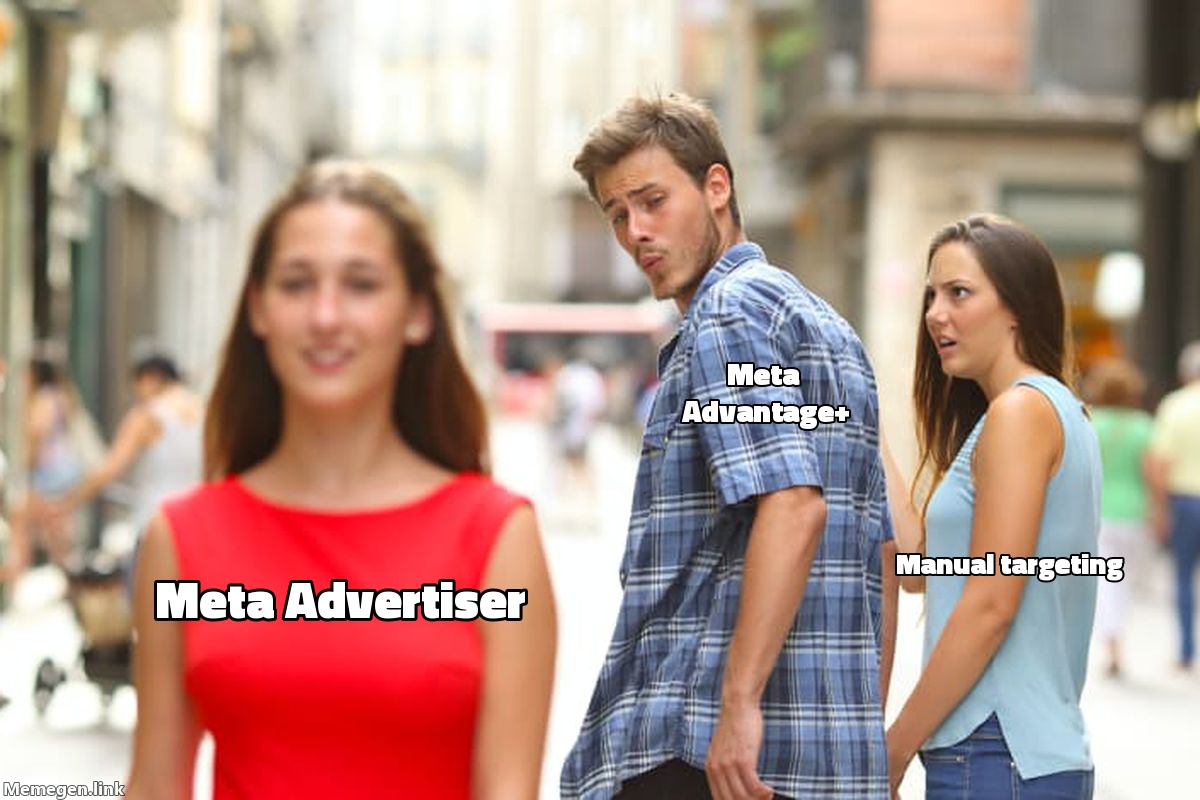
Meta has been steadily pushing Advantage+ Shopping Campaigns (ASC) as the primary format for e-commerce advertisers since late 2023. But in 2026, the nudge has become a shove — and if you haven't adapted your account structure, you're likely paying for it in efficiency.
What Is Advantage+ Shopping?
Advantage+ Shopping Campaigns consolidate what previously required multiple manual ad sets into a single, AI-driven campaign. Meta's algorithm handles audience targeting, creative rotation, budget allocation, and bidding automatically. The only inputs you control are your creative assets, your product catalogue, and your budget cap.
The pitch is simple: less time managing campaigns, better results through machine learning. The reality, as always, is more nuanced.
The Performance Case For ASC
The data from high-spending accounts is genuinely compelling. Meta's own benchmarks show ASC outperforming manual campaigns by 12–32% on cost per purchase across most verticals. Third-party analysis from agencies managing $50M+ in annual ad spend shows similar trends — ASC tends to win on efficiency once campaigns have sufficient purchase data (roughly 50+ conversions per week).
For brands with solid creative libraries and clean tracking, ASC removes a meaningful amount of manual overhead. The algorithm is genuinely better than most media buyers at finding marginal audiences that convert.
The Case Against Going All-In
Here's where it gets complicated.
You lose segmentation control. With manual campaigns, you can separate prospecting from retargeting, cold audiences from warm ones, and measure each funnel stage independently. ASC blends these together. If your retargeting pool is large, ASC will lean heavily on it — inflating your ROAS while your new customer acquisition quietly collapses.
Creative testing becomes harder. ASC optimises away from underperforming creatives quickly, which sounds like a feature but removes your ability to test with statistical discipline. You can't run a true A/B test on creative concepts when the algorithm is simultaneously adjusting spend.
You're dependent on pixel data quality. ASC is only as good as your attribution. If your pixel is misfiring, if you're running a 7-day click + 1-day view window, or if post-iOS 14 signal loss is significant in your audience, ASC's optimisation signals are corrupted at the source.
The Hybrid Approach That's Working
The structure most high-performing e-commerce accounts are converging on in 2026:
- One ASC campaign for broad prospecting and catalogue retargeting — let Meta's algorithm work where it's strongest
- One manual prospecting campaign targeting specific interest or lookalike segments you believe in — keeps you testing hypotheses the algorithm won't test on its own
- One manual retargeting campaign specifically for high-intent audiences (viewed product, added to cart, initiated checkout in last 7 days) — this is where you control message and offer
This structure gives you ASC's efficiency advantages while maintaining visibility into each funnel stage and preserving your ability to run proper creative tests.
What This Means for Your Audit Score
When Gromerce audits your Meta account, we look at campaign structure as one of the six pillars. Accounts that have migrated entirely to ASC without maintaining any manual testing structure tend to score lower on Campaign Structure — not because ASC is bad, but because the lack of segmentation makes it impossible to diagnose what's actually driving performance.
If your current ROAS looks strong but you're unsure whether it's driven by new customers or existing ones, running a free audit is a useful starting point. The campaign structure pillar will flag exactly this.
Key Takeaway
Advantage+ Shopping Campaigns are not a replacement for strategic thinking — they're a tool that rewards advertisers who bring clean data, strong creative, and a clear performance framework. The brands winning with ASC in 2026 are those that treat it as one layer of a structured account, not a plug-and-play solution.
Related articles: Meta Just Gave Claude and ChatGPT Access to Your Ad Account. Here's What Actually Changes. · Meta's AI No Longer Needs Your Audience Targeting. Here's What It Needs Instead. · Meta Just Changed What Counts as a Click — And Your Conversions Look Lower Because of It
Sources: Meta Business Help Center, internal agency benchmarks, Northbeam Q1 2026 Attribution Report