AI chatbots are changing where buyers discover brands before they ever hit a search bar. And new data from Meltwater should change how you think about LinkedIn — even if you don't run LinkedIn ads at all.
The citation data
Meltwater analyzed 9.5 million AI citations across six major platforms — ChatGPT 5, Google AI Mode, Google AI Overviews, Gemini, Copilot, and Perplexity — and found LinkedIn is the second most-cited source on the internet. Only YouTube ranks higher.
LinkedIn content shows up in 11 percent of AI responses on average across ChatGPT Search, Perplexity, and Google AI Mode. For B2B and professional topics, the number climbs further. For DTC brands selling products that require any trust-building — supplements, apparel, home goods — this is a channel that's influencing consideration whether or not you're paying for it.
The question is whether your brand is in those citations. Most aren't.
Your company page is mostly invisible to AI
Here's the part that stings: 75 percent of LinkedIn's AI citations come from individual member profiles, not company pages. Meltwater's analysis, which LinkedIn cited in its own playbook published this month, shows only a quarter of citations go to company-level content.
It goes further. More than half of all cited members had fewer than 10,000 followers. AI models aren't filtering for reach — they're filtering for what looks like genuine expertise. A post from your operations lead explaining an actual supply chain decision has more citation potential than a polished brand announcement of the same news.
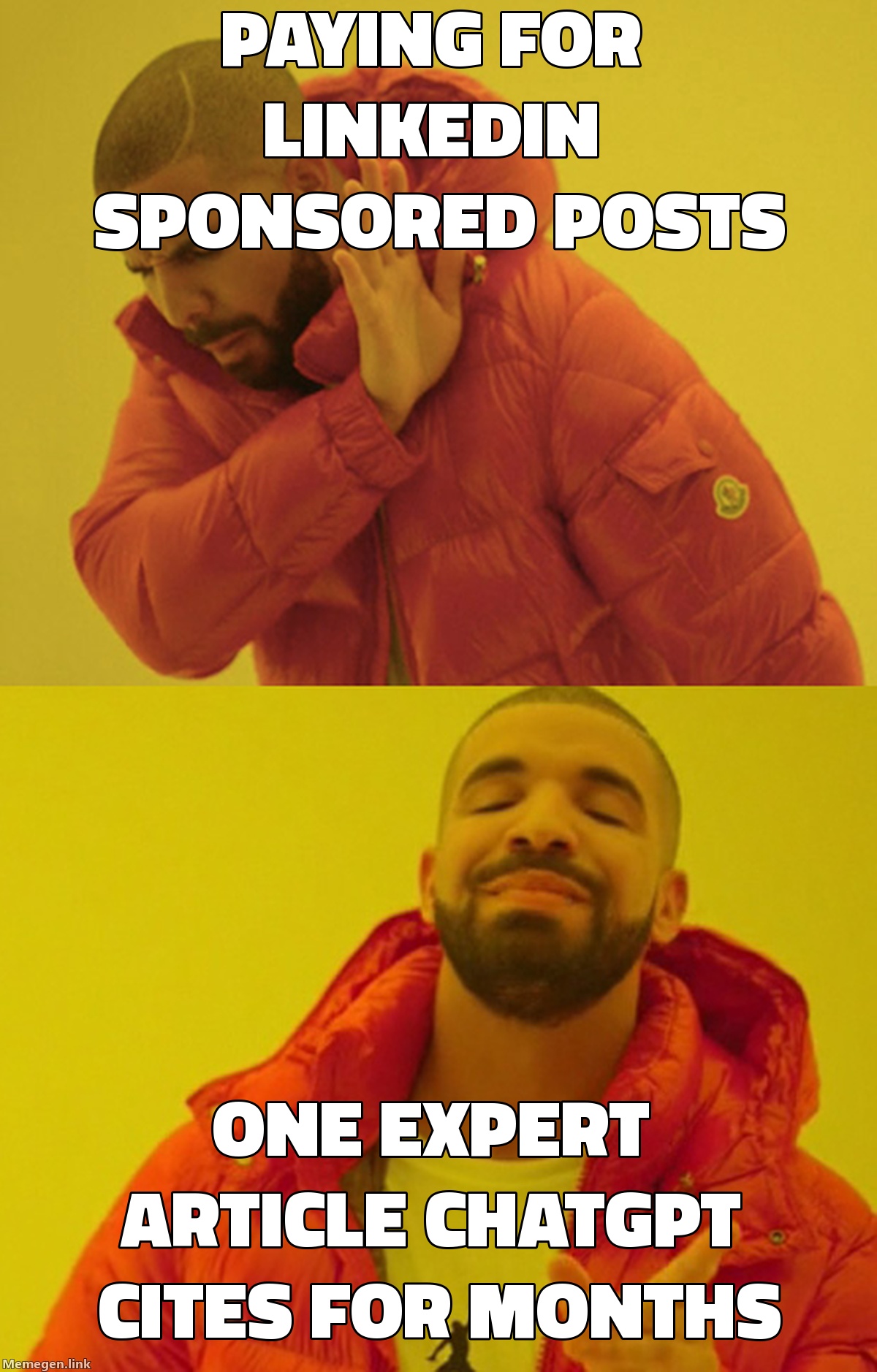
Your sponsored posts, meanwhile, contribute zero citations. The mechanism requires organic, indexable, first-person expert content. Paid placements don't enter the equation.
The original-content gap
LinkedIn's playbook — framed around a framework the company calls "The Credibility Stack" — found that 95 percent of citations on the platform come from original posts, not reshares. The standard LinkedIn strategy of redistributing industry news from other outlets builds no AI citation equity.
Long-form articles outperform short feed posts for citations. AI models treat them as evidence of substantive expertise rather than engagement-chasing. A 1,000-word breakdown of why you chose a specific ingredient, how a pricing decision was made, or what your returns data actually shows — that's what these models pull from.
The irony is that LinkedIn's feed algorithm deprioritized this kind of writing years ago in favor of short-form content that generates quick comments. That content still earns engagement. But it doesn't earn citations.
What this means for your marketing spend
If LinkedIn paid is working for pipeline, keep running it. Sponsored content still reaches specific audiences and drives retargeting. The problem isn't that LinkedIn ads are ineffective — it's that they do nothing to build your brand's presence in the AI discovery layer.
The brands showing up in AI chatbot responses are the ones where founders, senior operators, and subject-matter experts publish original analysis regularly. These people often have modest follower counts. They aren't social influencers. They're practitioners in their field who write with specificity about what they actually know.
The comparison is direct: one well-researched founder article stays on LinkedIn for years and can accumulate AI citations for months after publication. A sponsored post stops the moment the budget does.
What to actually do
Four questions worth working through this week:
Search your brand name and product category in ChatGPT and Perplexity. Note whether LinkedIn content appears — and if it does, look at who wrote it. Employees? Customers? Competitors? If nothing appears, your AI citation baseline is zero.
Identify who in your organization can write with real specificity about your category. Not marketers trained to stay on-message — people who can explain actual decisions, tradeoffs, and data with accuracy.
Set a minimal publishing cadence. Monthly is enough. One substantive original post outperforms twelve reshares of someone else's research.
Look at which LinkedIn content from competitors or category leaders shows up in AI responses. It tells you the format and depth these models reward — not to copy, but as a benchmark for what "enough" looks like.
The window for early citation equity on LinkedIn is still open. Most brands haven't treated AI visibility as a content strategy yet. Meltwater's research shows it's already moving real volume — 9.5 million citations analyzed, LinkedIn appearing in 11 percent of responses. That compounds with time.
If you want a clearer picture of where your brand currently shows up across paid and organic channels, a free account audit can surface gaps you might not see from inside the dashboard.
Your LinkedIn ads buy reach. Nobody buys AI citations — but someone is earning them, and it's the brands with experts writing original content.
Sources: LinkedIn, Social Media Today, September 2026