Google rolled out Maximize Conversion Value bidding for Standard Shopping campaigns without a Target ROAS requirement. Search Engine Land reported it June 26. If you run Standard Shopping campaigns, this is worth understanding before you or someone on your team accidentally enables it.
The change
Previously, value-based bidding in Standard Shopping required a Target ROAS target. Maximize Conversion Value existed as a bidding strategy, but only as a paired option — the flexibility came with an efficiency floor built in. Your choices were manual CPC, Enhanced CPC, or Target ROAS with MCV attached.
The new setup removes that dependency. You can now enable Maximize Conversion Value and leave the Target ROAS field empty.
What happens without a ROAS floor
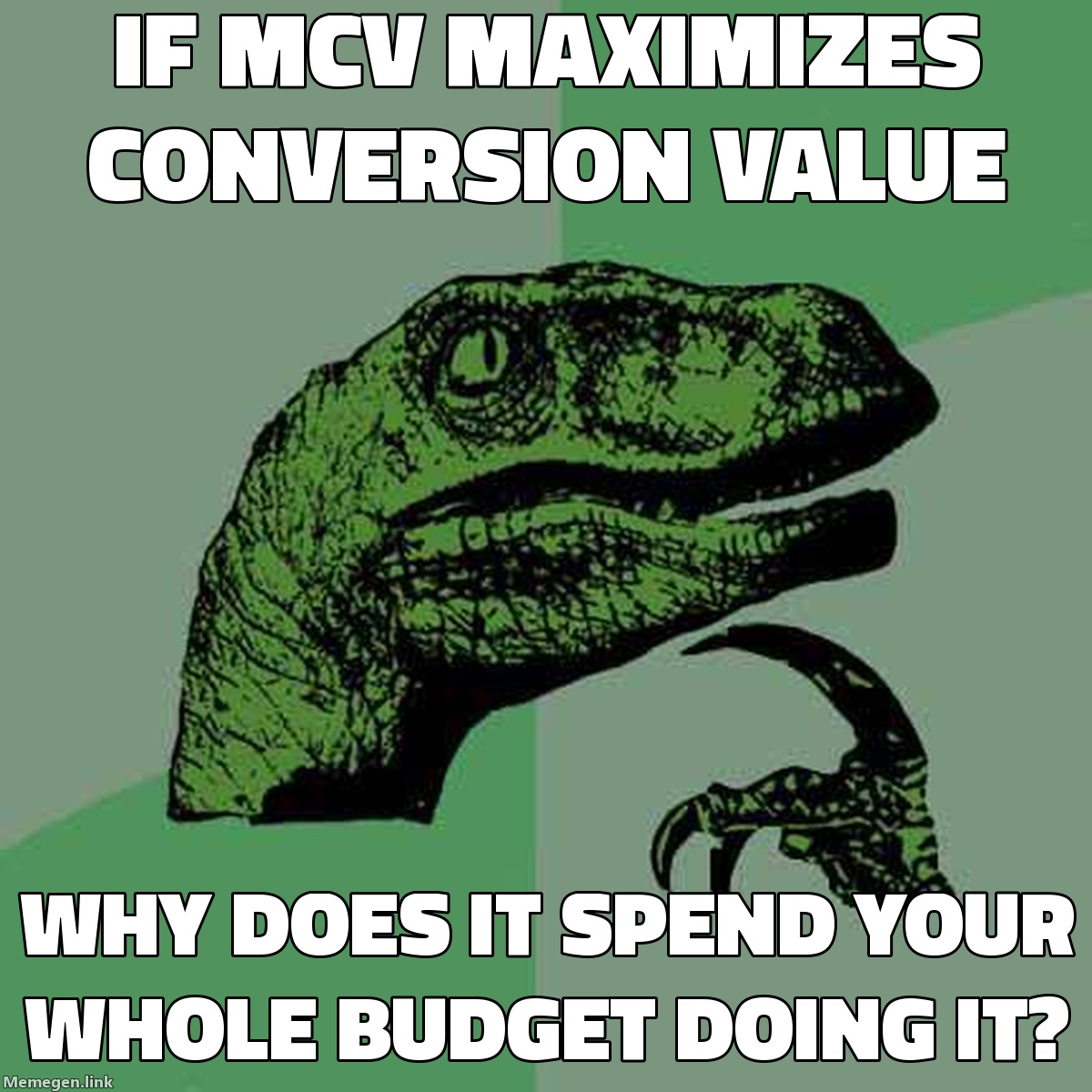
Google's own documentation is direct about this: without a Target ROAS set, Maximize Conversion Value will attempt to fully spend your average daily budget.
That's not vague language. The algorithm pushes bids until spend hits the daily budget ceiling. If your campaign has been running at $150 of a $300 daily budget, enabling MCV without tROAS won't maintain that efficiency. It expands bidding into queries you haven't historically competed for — lower-intent terms, broader product matches — until spend reaches the cap.
The case for this: you accumulate conversion value signals faster by reaching more inventory. The case against: you pay for those signals by accepting a lower average conversion rate across the expanded auction footprint. Whether that tradeoff is worth it depends entirely on where you are in the campaign lifecycle.
Why Google is doing this
Standard Shopping has been the controlled alternative to Performance Max. You get product-level visibility, placement reporting, and explicit bidding control. The tradeoff is missing some of the automation PMax provides.
MCV without tROAS closes one of those automation gaps, and the direction from Google is consistent: value-based bidding is being standardized across every campaign type. Shopping, PMax, Search, Demand Gen — all moving toward conversion value as the primary optimization signal.
There's a practical argument that this reduces the need to run PMax just for MCV bidding. If a Standard Shopping campaign can now optimize toward conversion value, you don't have to choose between PMax's automation and Standard Shopping's visibility. For accounts that were running PMax solely because they needed MCV, that's a trade-off worth revisiting.
When this actually makes sense
New campaigns without enough conversion history to set a meaningful Target ROAS are the legitimate use case.
A campaign running three weeks on Enhanced CPC with 12 conversions doesn't have enough data for a tROAS constraint to work intelligently. Setting a target too early locks the algorithm into an efficiency anchor before it has a clear picture of what efficient means for your product set. Running MCV without tROAS for 4–6 weeks, accumulating signal, then layering in a tROAS once you have 50+ conversions is a reasonable setup path.
Outside that window, enabling MCV without a ROAS anchor in an established campaign is a different decision. The algorithm has no efficiency constraint. It will push spend toward the budget ceiling and optimize for maximum conversion value at whatever conversion rate the expanded auction delivers.
Three things to check now
Pull all Standard Shopping campaigns across every account you manage. Sort by bidding strategy. Any campaign showing Maximize Conversion Value where you'd expect to see Enhanced CPC or Manual CPC deserves a second look — either someone enabled it recently, or Google surfaced the option prominently enough that it got clicked during routine editing.
For campaigns already running MCV, check the Target ROAS field. If it's blank, look at actual ROAS for the past 30 days and set a target at roughly that number. Don't push the target significantly above recent actual performance — the algorithm will throttle delivery trying to hit an efficiency level it hasn't achieved. Match real performance first, then adjust upward over time.
Look at daily budget utilization over the past two weeks. Any Standard Shopping campaign that jumped from 55–65% of its daily budget to 85–90%+ recently has a pattern worth investigating. That's what unconstrained value bidding looks like as it reaches for more inventory.
The broader shift
The platform is moving away from the idea that you set bids. Smart Bidding already determines the actual auction bid. What you're doing when you set a Target ROAS is constraining the algorithmic search space — telling the system where the efficiency floor lives.
MCV without tROAS removes that constraint. For new campaigns in accumulation mode, that's sometimes the right call. For established campaigns running actual business budgets, it's a setting that warrants deliberate review before anyone enables it — including you, during an otherwise routine campaign check.
If you want a clear view of how your Shopping campaigns are structured across bid strategy and ROAS constraints right now, the free audit at Gromerce surfaces that in a few minutes.
Maximize Conversion Value will find ways to spend your budget. The only question is whether you set the conditions first.
Sources: Search Engine Land, Google Ads Help, SERoundtable, June 2026