The global Google Marketing Live keynote ran May 20. The EMEA edition followed a day later out of Dublin. The announcements weren't dramatically different, but the timeline pressure is real and the implications for European and Gulf advertisers running Search campaigns are specific enough to separate from the US-focused coverage.
Two things matter most for EMEA e-commerce accounts: the September AI Max migration wall, and the UK expansion of Universal Commerce Protocol. Here's what both mean in practice.
The September deadline isn't a suggestion
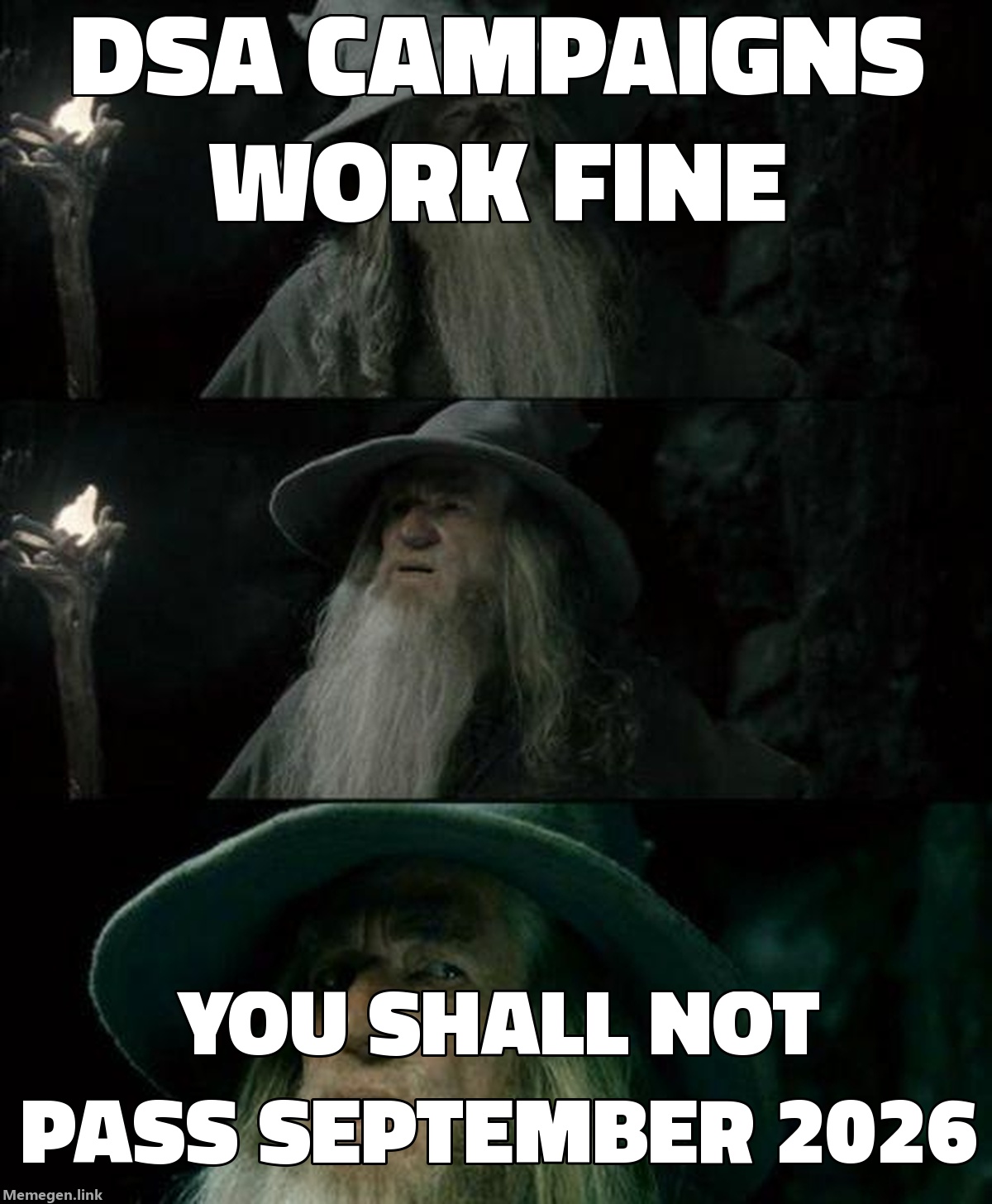
Google confirmed at GML that Dynamic Search Ads are being retired in September 2026. If you haven't migrated your DSA campaigns to AI Max by then, Google will auto-migrate them. That distinction matters more than it sounds.
Voluntary migration lets you carry over your existing settings, exclusions, and bidding structure. Auto-migration is a clean slate — Google sets the defaults. For accounts running DSA with tight brand exclusions or specific audience layering, auto-migration can undo months of account architecture work in one step.
The window for voluntary migration is open now. The problem for EMEA accounts specifically is that AI Max for Search has been rolling out in phases, and some European markets received access later than US accounts. If you're in the UK, Germany, or Gulf markets, check whether AI Max is available in your account today before assuming you have time.
Migration is not a single campaign change. You need to audit page feeds, check URL exclusions, validate that your audience signals carry over, and test AI Max's broader URL expansion setting — which by default lets Google serve ads on pages beyond your specified target URLs. That setting alone can send traffic to pages you haven't optimized, or that aren't even meant to be landing pages.
AI Max for Search and what changes for EMEA keyword strategy
AI Max replaces keyword-matched targeting with intent-based matching across conversational queries. For US accounts, the rollout preceded GML by several weeks. For EMEA, especially markets with multilingual inventory — UK English vs. regional dialects, Arabic-speaking Gulf markets alongside English searches — the intent matching works differently.
Google's AI interprets query intent, not just words. An Arabic query for "ملابس رياضية للنساء" and an English query for "women's activewear" may resolve to the same inventory. If your product feed and ad copy are only set up in one language, you're leaving query coverage on the table regardless of which language the buyer searches in.
The practical implication: for Gulf-market advertisers specifically, AI Max's language-agnostic intent matching means your Arabic-only or English-only campaigns may now compete across both query pools. You should be auditing whether your ad copy and landing pages work in both languages, not just your targeting.
Demand Gen is showing measurable returns in the meantime. Google cited data showing advertisers who add Demand Gen to an existing Search and Performance Max mix see 10% higher ROAS and 12% higher sales on average. EMEA accounts that haven't tested Demand Gen as a complement to Search are leaving a proven lift on the table.
Universal Commerce Protocol is coming to the UK
Universal Cart launched in the US on May 19, 2026. Google confirmed at GML EMEA that UCP is expanding to Canada, Australia, and the United Kingdom in the coming months.
This is significant for UK e-commerce advertisers. UCP means a buyer can complete a purchase inside AI Mode or the Gemini app without visiting your site. The checkout happens in Google's interface; your Merchant Center feed is the product data surface. There is no landing page in the traditional sense.
The conversion signal changes too. When a sale completes inside Google's native checkout, the attribution path is different from a standard click-to-site conversion. Advertisers who haven't set up Direct Offers in Google Ads and haven't connected UCP to their Merchant Center won't show up as eligible sellers when buyers are ready to purchase inside the AI interface.
UK merchants should connect UCP eligibility now, not when the feature fully launches. Merchant Center already accepts the required feed attributes — native_commerce flag, structured checkout data — and pre-connecting means your products are eligible from day one of UK rollout rather than catching up after the fact.
For Gulf-market advertisers, UCP expansion into that region wasn't announced with a specific timeline. But the pattern from GML 2025 to 2026 suggests Gulf and MENA rollouts follow UK expansion by six to twelve months. The account preparation work is the same regardless of launch date.
Ask Advisor and what it actually does to your workflow
Google's new Ask Advisor agent connects Google Ads, Analytics, Merchant Center, and Marketing Platform into a single conversational interface. You ask it a question — "why did ROAS drop last week," "what's my feed coverage gap for AI Mode" — and it pulls from all four data sources simultaneously.
The practical value isn't the AI interface itself. It's the cross-product context. Most EMEA accounts have their Merchant Center, Ads, and Analytics in silos — someone runs campaigns, someone else manages feed quality, a third person checks Analytics. Ask Advisor forces a unified view. If feed quality is suppressing Shopping impressions while your campaign-side analyst is chasing CPCs, Advisor surfaces both in the same answer.
Rollout for Ask Advisor is global and phased. It's worth checking whether it's available in your account today — the feature appears in the Google Ads interface as a conversational panel if you have access.
What to do before September
Run a full DSA audit in the next two weeks. List every Dynamic Search Ad campaign, its URL targets, audience signals, and exclusions. Decide which you'll migrate manually versus which are low-priority enough to let Google handle. Then start the voluntary migration process, starting with your highest-spend DSA campaigns.
Check UCP eligibility in Merchant Center if you're a UK merchant. Set the native_commerce attribute in your feed for eligible products. Add your Merchant Center account to the Direct Offers program if you haven't done so already.
And test Demand Gen. The 10% ROAS lift from adding it to a Search + PMax mix is not a Google estimate based on internal testing — it's drawn from advertiser data across accounts. If you're running Search and PMax but not Demand Gen, you have a gap worth closing before Q4.
The free audit at Gromerce covers account structure across Search, Shopping, and feed quality — it'll surface the gaps that matter before September hits.
The DSA deadline is the same in every market. The only variable is how much time you've spent preparing.
Sources: Search Engine Land, PPC Land, Google Blog, Google Marketing Live EMEA 2026, May 2026