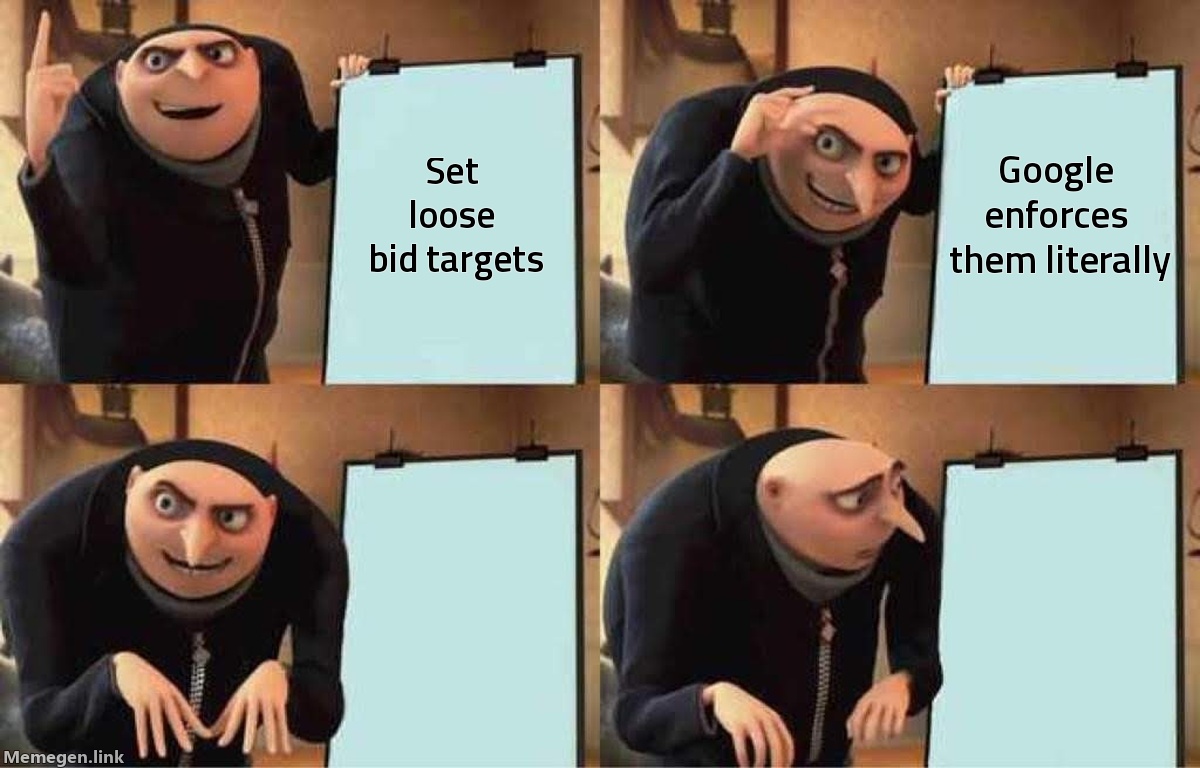
Google is changing how budget-limited campaigns bid, and the deadline is August 17. If any of your campaigns show "Limited by budget" and run Target CPA or Target ROAS, there's a real chance your efficiency numbers shift — and it won't be because of anything you did.
What's Changing
Right now, when a campaign is budget-constrained and uses a Target CPA or Target ROAS strategy, Google concentrates spend on the cheapest available auctions to stretch that budget as far as possible. A campaign set to a $10 Target CPA might actually be delivering at $5 — not because the target was wrong, but because budget scarcity forced Google's bidding system to be highly selective.
Starting August 17, that stops. Budget-limited campaigns will optimize toward the bid target you actually set, not toward the best performance available within the existing budget. Google is framing this as a consistency fix — campaigns should behave according to the target you set, not deliver a hidden efficiency bonus because they happen to be budget-capped.
The practical result: any campaign outperforming its stated CPA or ROAS target will start moving toward that target. If you're delivering $5 CPAs on a $10 target, expect that gap to close.
Budgets won't increase automatically. Spend stays the same. But your efficiency will change.
Which Campaigns Are Affected
Search, Shopping, Performance Max, Demand Gen, Display, Hotel, and Travel campaigns are all included. The change applies whenever a campaign status shows "Limited by budget."
If your campaigns aren't budget-constrained — if they have headroom to spend more than they currently do — this change doesn't apply to you.
Performance Max and Shopping campaigns with tight budgets deserve extra attention. These campaign types have often outperformed their ROAS targets precisely because Google routes budget toward the highest-return auctions when spend is limited. That routing advantage ends on August 17. If you've been attributing strong Shopping performance to targeting or creative quality, double-check how much of it was the bidding behavior instead.
The Tool You Should Run Right Now
Google released the Bid Target Adjustment Tool on July 6. It's available in the Recommendations section of Google Ads and through your campaign bidding settings. The tool compares your stated targets against historical actual performance and quantifies the gap.
Run it before August 17. Sort by the size of the gap between target and actual performance. The campaigns with the biggest gaps are the ones most likely to look different after the change — not because anything externally shifted, but because the bidding logic finally matched what you asked for.
What to Do Before the Deadline
You have three clear paths.
Do nothing. If your targets are set where you genuinely want them, no action is needed. After August 17, delivery will align with those targets. If your $10 CPA target reflects what you need the campaign to deliver, the change actually works in your favor — you get consistency instead of an unpredictable efficiency bonus.
Update your targets to match actual performance. If you want to preserve the efficiency your campaigns have been delivering, move each target to match current actual performance. A campaign running at $5 CPAs needs a $5 target set explicitly. That performance level doesn't disappear — you just have to define it as the goal.
Increase your budget. Removing the "Limited by budget" status removes the issue entirely. If outperformance has been the justification for holding budget steady on these campaigns, August 17 is the clearest argument yet for unlocking more spend.
Act before the change, not after. A CPA that doubles following a platform update — with no change to your targeting, creative, or landing pages — is a conversation no account manager wants to have. The Bid Target Adjustment Tool gives you 10 days to find the gap and close it deliberately.